Showing posts with label History. Travel. Show all posts

Wednesday, June 19, 2024

Turkey, Thoda Hatke!

A much overdue international vacation had been weighing on our minds. And then lo and behold! Guru, the planet of travel and exploration finally aligned in our astro charts and proclaimed, “Awasares, ho ja shuru!”. Thus, began our plans for an international vacation in 2024. Jokes aside, though many mini holidays in India had happened regularly, an international vacation fructified for us after a drought of eight long years. As if a divine intervention was much required.

While ‘A’ prefers to travel back in time (read, historical places), I love traveling – period! Turkey was always on our radar along with a few other destinations and when Khaki Tours announced their Turkey trip, we totally “tripped”! We said, this is it! I firmly believe that one does not choose a destination. The destination chooses you! So, among all the shortlisted destinations, Turkey chose us!


Having visited Greece in 2016, Turkey seemed like a perfect follow-through. Joined at the hip, these two countries have a shared history and culture, and yet both are interesting and distinctive in their own ways. The Yin and the Yang of the Mediterranean region!

The web has spawned reams of pages promoting Turkey as a popular holiday destination. After all, it features in the top ten countries visited by tourists globally. Also, many I know have ticked it off their bucket list long before we landed in Istanbul. With so much already out there and experienced, what could one possibly dish out on Turkey without making anyone feel stuffed like one (pun intended). Hence, “Turkey, Thoda Hatke”, is my humble attempt to bring to light the country’s less experienced side (or so I presume) that we enjoyed and also that is scarcely meta-tagged. Whether or not you have been there and done that, I am hoping this will interest you - Now or in the future!

This is a list of must-visit and must-experience items based on our memorable 12-day holiday with Khaki Tours. Quite frankly, an A-to-Z list would be foolish for me to attempt with just one Turkey visa stamp on my passport. However, this short list can be a good starting point.

Here we go!!!


MUST VISIT PLACES

A for Assos

I must say that the Temple of Athena resting high on top of a hill in Assos village is the best-kept secret of the calm Aegean Sea. A winding stone-cobbled path through a quaint Greek-looking village took the wind out of us as we huffed our way to the top. But believe me, it was worth every single mg of calorie that was lost in that little village. When we finally reached the summit, right below our feet stood the hallowed grounds belonging to the wisest. Aristotle is said to have taught his disciples here in 350 BC. What welcomed us were the remains of the doric columns standing stoically for over two thousand years. If only they could talk! 

On the other hand, the feisty winds on the hilltop were not so welcoming. They were literally blowing us away and throwing us off the ground as if to say, “Shoo, get going, you don’t belong here!”.
As we maneuvered the heckling winds, the sight of the serene expanse of turquoise blue Aegean Sea down below calmed our nerves instantly. Those breathtaking views will remain etched in my memories. Not on the typical tourist map, the ancient ruins dated 6th century BC are a must-visit if passing through Behramkale. Only on our way down, did we grasp the true charm of the Assos village that we missed while catching our breath on the way up. Many small handicraft shops selling delicate crochet work, dried herbs and spices and souvenirs dotted the path. Most run by old frail women of Assos village, the shops, unfortunately, wore a deserted look (possibly it was off-season). Stooped with age, they appeared to carry the weight of the village’s economy on their dainty backs.

Tip: What we got from the shops were coarsely cut large chunks of olive oil soaps that are popular even among the locals. Some of us also bought local handmade trinkets and bracelets as souvenirs.

Temple of Athena, Assos
(Pic Courtesy: Rishabh Shukla)

B for Basilica Cistern

Though a popular inclusion in the itinerary of every tourist to Istanbul, I am including this beauty here only to reinforce the fact that this experience should not be missed for anything! A magical place, a stunning splendor, an architecture marvel, a historic gem, and a photographer’s delight all rolled into one. Along with the Hagia (Aya) Sofia, Emperor Justinian I from the Byzantine era is credited for this engineering feat built in the 6th century during his reign. The grandness and aura of this place are overwhelming. I could not believe my ears when the guide remarked that this magnificent system was created 1500 years ago. The cistern that could store 80,000 cubic meters of water was built to provide water to the entire city of Istanbul, which was then known as Constantinople. The cistern is supported by 336 columns each one unique though they appear similar in height. Each of these columns was salvaged from ruined buildings and is thought to have been brought from various parts of the Byzantine Empire. The cistern was forgotten for centuries and was rediscovered by chance in the 16th century when a Dutch traveler noticed locals retrieving water from a hole in their basement floor.

Tip: As you walk down the steps to enter the cistern, you will be engulfed with humidity and warmth. Some may find the ambiance spooky too! But don’t be spooked! In fact, the atmosphere will grow on you, and at the end, you will feel sad that the tour is over.
By the way, the movie “Inferno” was shot here for its climax scene.


C for Cleopatra's Antique Pool

Situated near the white travertine pools of Pamukkale, tourists are known to make a beeline to bathe in “Queen Bee’s Antique pool”. You read it right! Legend says this thermal pool was once used by Egyptian Queen Cleopatra for a dip to relax herself from the tiredness of long travel.

Whether it is for Dawa or Queen’s Dua we don’t know but as expected the pool had in it many Deewanas (including yours truly). This unique and magnificent location is apparently fed by the same hot springs that are found in the Hierapolis region. As we took a dip and swam in the medicinal waters, we could not help but notice the rising glow on our faces (or so I think). We don’t know if the radiance was the result of our body experiencing the warmth of thermal springs in the cool climes or the surreal joy of knowing that the famous beauty queen once bathed in the same waters centuries ago or just a psychosomatic effect. Whatever it was, for this water baby, soaking in these historical mineral waters was a blissful experience. Today, this place is run like a professional spa that allows you to enjoy these antique therapeutic waters with all modern facilities.

Cleopatra's Antique Pool
(Pic Courtesy: Expedia.com)


Tip: Be careful while wading through the pool. Walking on the floor bed of the pool your feet will meet stones and pebbles of all shapes and sizes settled at the bottom. Be ready to be surprised!
For safety purposes, deeper sides are clearly demarcated to warn the non-swimmers.

G for Gallipoli

Visiting this place literally gave me goosebumps and filled me with pride, especially after knowing the story of the forgotten Indian soldiers of Gallipoli.
Battle of Gallipoli is that infamous military event that resulted in the downfall of Winston Churchill and also the emergence of the Turkish military hero, Mustafa Kemal Ataturk.
The Battle of Gallipoli also called the Dardanelles Campaign (1915-16) was an unsuccessful attempt by the Allied Powers to control the sea route from Europe to Russia during World War I.
Along with British troops, there were soldiers from Australia, New Zealand, Ireland, France including India. Considered to be one of the bloodiest battles of World War I it witnessed the death of tens of thousands of soldiers on both sides. There has been an ANZAC memorial built on the Gallipoli peninsula to pay respects to the soldiers from Australia and NZ who laid down their lives but for the longest time, the contribution of Indian soldiers was completely forgotten or erased. At least 1500 Indian soldiers who fought the battle lost their lives along with the ANZACs. Though today the proof of their sacrifice and bravery is carved into the Helles war memorial, their contribution is often conspicuously absent from many history books.


Helles Memorial at the tip of Gallipoli Peninsula

Names of Indian Soldiers at the Helles Memorial


Additionally, we also visited the ANZAC Cove cemetery located on a beach which is also a picturesque location. There are around 252 Commonwealth servicemen of the First World War buried or commemorated in this cemetery including the names of three Indian Muslim soldiers as well.

ANZAC Cove memorial


Tip: As you walk along the periphery of the Helles War Memorial do try to read the names of the soldiers etched on the side walls. You will stumble on the names of Indian soldiers belonging to the Gorkha and Punjab regiments commemorated for posterity. An unlikely place to feel a sense of national pride as you read the Indian soldier’s names in a foreign land.

Also, don’t miss the famous heart-rending and inspiring words attributed to Mustafa Kemal Ataturk etched on a wall at Gallipoli Peninsula - “Those heroes that shed their blood and lost their lives ... You are now lying in the soil of a friendly country. Therefore, rest in peace. There is no difference between the Johnnies and the Mehmets to us where they lie side by side here in this country of ours ... You, the mothers who sent their sons from faraway countries, wipe away your tears; your sons are now lying in our bosom and are in peace. After having lost their lives on this land they have become our sons as well.”

Famous words by Kamal Ataturk at ANZAC Cove

I for Ilhara Valley

No one can resist the lure of a trek through the magical Ilhara Valley. Even the laziest can give in to its surreal beauty. It was an enchanting five-kilometer leisurely walk passing through the woods with lovely greens, gurgling rivulets, cooing birds, and fleeting butterflies as a company. This is one trek you will wish never ends as walking through the peaceful Ilhara Valley is akin to going on a pilgrimage or a soulful journey.

The valley is a deep river canyon in Western Cappadocia with lush vegetation, cave churches, and towering cliff faces, a visual experience one should not miss.
It is so pristine and picturesque that at the end, one of our friends in the group jokingly remarked that Ilhara Valley cannot qualify as a “trek” for us Indians. After all, we could not find a single gutkha packet or empty rum bottle lying around anywhere on our walk.

Enjoying the views of Ilhara Valley
(Pic Courtesy: Rishabh Shukla)

K for Kaymakli Cave City

Cappadocia’s landscape is generous in every sense. It has a lot to offer for tourists. Not surprisingly, Cappadocia is invariably packaged with Istanbul in travel itineraries though it is a flight away. Not just its length and breadth but it offers you thrilling heights of excitement with the hot air balloon ride and gorgeous Goreme Open Air Museum on one end and at the other end breath-taking depths of cave cities that are almost 80 meters deep - that’s like buildings with 20 floors below the earth’s surface.

Kaymakli Underground City was the only place I was anxious to visit much before the holiday travel began. Since I have claustrophobia, crawling through narrow tunnels is not my idea of fun. However, once the guide shared with the group that the underground cave city has options to exit the cave if one feels anxious and unsettled, I felt a bit relieved. I changed my mind and bravely decided to give it a go. And boy, am I glad I went for it. It was an experience I will not forget easily.
Built at eight levels below the ground level, the tour is available only till level four for tourists. Believe me, I had it by level two itself. Not just me but all others in the group too. So, you can imagine! Crawling on bended knees, through confined tunnels and low ceilings, the cave city carved out of soft volcanic rock is overwhelming. The Phrygians, a civilization that flourished in central Anatolia from 1200-700 BC, are credited with building the Kaymakli Underground City. Later the Christians used it as a haven to hide and protect themselves from Romans (Pagans) in 3 CE and later from Arabs in 7-8 CE to avoid persecution. Besides human life, the city was also used to safeguard cattle and stockpile food and water supplies. At level one it would have the stables, level two was usually the place of worship or Church, at level three there were storage spaces and kitchens and at level four they would keep huge earthenware jars and abundant storage places. At any given time, at least 3500 people used to live in Kaymakli underground city. It is a mind-blowing experience that should not be missed while in Cappadocia! Even if you have claustrophobia (like me).


Tip: As we were exiting the cave city, there were serpentine queues of tourists wanting to get in at peak time. Thank God, the folks at Khaki Tours pre-empted this scenario and hence scheduled our visit early in the day and not during peak time. Imagine a traffic jam of people in those narrow spaces. I just shudder to think about it!

Crawling through Kaymakli Underground city like termites in an anthill

S for Streets of Karakoy, Istiklal Avenue, Nisantasi

The best way to explore Istanbul is on foot! There is so much going on the streets of Istanbul that you can spend an entire day from brunch to dinner and yet there would be more to discover. Full of historical and cultural experiences, they have a charming beauty and elegance that’s unique to the city. On one end you will find a historic heritage tram trudging along and on the other, you will find high fashion labels in exclusive galleries. For those who enjoy a good evening/nightlife, you will find the best bars in Istanbul and also many beautiful restaurants and cafes, hosting many different Turkish food or other cuisines. Interestingly, each street has its own charm and personality distinct from the other. You cannot just visit one. You have to visit all the streets to get a “taste” of what Istanbul has to offer. Karakoy, Istiklal Avenue, and Nisantasi are just a few streets we visited. There are many more in Istanbul that are worth visiting.

Streets of Karakoy


The above is a video of the fans of the Galata Serai football team celebrations as they romp through Istiklal Avenue post a grand win.

MUST EAT/DRINK/EXPERIENCE

A for Ayran
If you are a Chhaas or butter milk person then you will love Ayran! This drink makes for a perfect healthy accompaniment during meals. With a hint of salt already added to it, you will enjoy this drink whether it is homemade or a branded off-the-shelf product. We loved both versions. Make sure you include this in your meals.
Tip: If flying Turkish Airlines, ask the air hostess if it is part of the drink’s menu. If yes, go grab it before they run out of it! If you are late in asking, highly probable the air hostess will come back and say, “Sorry, Ay ran out of it!”.


C for Corba

Apparently, soups have held an important place in traditional Turkish cuisine for centuries. The Turkish word for soup, çorba, is derived from the Persian šurbâ, a combination of the two words’ salty’ and ‘love’. The Turkish Red Lentil soup known as Mercimek Çorbası locally, is the most common “Corba” found in restaurant menus. Pronounced as Chorba, it is quite similar to the word Shorba we use for the soups in Mughlai cuisine. The red lentil soup not only works as a great comfort food but is satisfying and a nutritious appetizer. It cleverly combines rudimentary veggies like onion, carrots, and potatoes with red lentils and swirls up a homey surprise that tastes like comfort food. Akin to our very own Varan Bhaat (lentil rice) drizzled with homemade tup (ghee)!
Tip: As a vegetarian, it was my go-to soup for many of my meals and sometimes at breakfast too (with bread and Turkish string cheese).

The Red Lentil Soup
(Pic Courtesy: Rishabh Shukla)


D for Dondurma

Ice cream in Turkey is Dondurma. “No one can eat just one!”, is a phrase coined probably to describe the irresistible Dondurma. Richer, milkier, and with a lip-smacking taste, Turkish Dondurma can test the self-control of the most strong-willed person.

One can find Dondurma, all across the country sold at baklava shops, street vendors, and restaurants as if they are testing your willpower. It is available in a variety of flavors. But my favorite one remained the Pistachio. Even the Wall’s ice cream is so much more creamy and tastier here than what we get in India. [Try the Blue Berries Wall’s ice cream – it is enticing!]

And then there is Maras Dondurma, an ice cream with a unique taste and texture that needs to be acquired. But I will also add that you must try it at least once while you are here. This traditional Turkish ice cream is sweet, creamy, stretchy, and slightly chewy at the same time. Apparently, the chewiness of the ice cream comes from the goat’s milk and an ingredient called salep (starchy root of wild orchids endemic to the region).

Tip: You will get better quality Dondurma from outlets viz. Gulluoglu (Karakoy) and Mado (chain). Gulluoglu is also known for the best Baclavas in Istanbul.
Avoid the fellows in traditional outfits banging their ladles aggressively on the metal pots luring you to make a fool out of you. Unless you just want to get teased and taunted for a scoop of Turkish Ice cream that’s sub-par in taste and quality. 

Best Dondurma at the legendary Gulluoglu in Karakoy

G for Gozleme

A sure-fire recipe to stop your craving for Indian food (if at all) while in Turkey. Have the Gozleme! The crispy, golden Turkish flatbreads are stuffed with all sorts of tasty fillings that look and taste like our warm flaky buttery parathas. Just like parathas come in various fillings, these too have multiple options. You can choose from Spinach and Feta, Potato and Feta, or spiced red meat. Whichever way you prefer them, I am sure, your longing for Indian food will quickly disappear like the fresh servings of hot Gozlemes will vanish from your plate.

Tip: The one with yellow cheese (Kaseri) goes well with soups and gives you a dal paratha-like taste.

The scrumptious Gozleme
(Pic Courtesy: Rishabh Shukla)

K for Kumpir

Kumpir is to the streets of Turkey like Vada Pav is to the streets of Mumbai. As simple as that. One of the most popular streetside food in Turkey it can be served with a variety of toppings and combinations. It is commonly sold by street vendors and small shops and its popularity lies in its rich flavors and the ability to be customized.
For this dish, huge potatoes are baked in the oven, split open, and the fluffy flesh of the jacket potato is mixed with butter, salt, and a Turkish cheese similar to mozzarella. The potato is then loaded with an array of toppings that include olives, pickles, sweetcorn, Russian salad, pickled cabbage, beets, mushrooms, and coleslaw. You can have the non-vegetarian version by adding sausages too.

Turkish Kumpir is a versatile dish originally from former Yugoslavia. But today the Turks have made it uniquely their own by introducing an array of diverse fillings and toppings.
“Yeh nahi khaya to kya khaya!” Truly, we stuffed ourselves with Kumpir on many occasions, and that probably helped us gain back all the weight we had lost by walking the many streets of Istanbul.

Kumpir, a meal by itself

Kumpir in the background with a huge Mezze platter upfront


With that, we come to the end of “Turkey Thoda Hatke”, a travelogue inspired by the “Turkey Unveiled” tour meticulously organized by the Khaki Team. They truly know how to Keep Heritage Alive and Kicking Internationally too!
In addition to the above, there is so much more that we experienced.

The historic Ephesus. The fascinating Fairy Chimneys. The iconic Mevlana Museum of Rumi. The travertines of Pamukkale. The heady hot air balloon ride. Remarkable Hierapolis, Quietly Brilliant House of Virgin Mary. Buzzing alleys of Grand Bazaar and Egyptian Bazaar, Mulla Nasruddin’s tomb, World-famous duo Hagia Sofia and the Blue Mosque. The majestic Dolmabahce Palace and more. But quite frankly, they have all been written about generously. “Turkey Thoda Hatke” is a tribute to those interesting experiences and places that usually don’t get talked about as much as they deserve.
Thanks to Khaki Tours, A and I have created many beautiful memories of Turkey and more importantly with like-minded travellers who have become our friends for life!

Quick Bonus Tips:


Best time to visit
: April to June and Sept/Oct as the crowds are less and weather is also suitable
Currency: The Euro is largely accepted. However, carry a few Liras as they may be required for using loos (mostly clean) in public places or local street shopping. Usually, 5 to 10 Liras are charged per person for using the public loos.
Conversion: Get the foreign currency in exchange shops located in public or busy marketplaces if possible. For instance, we got the best rate in the Grand Bazaar area in Istanbul.
Airlines: Don’t delay booking your flight tickets once the destination is decided. Book at least two months in advance to get good prices. They can easily double as you get closer to the travel date. Preferably book Turkish Airlines (and not Indigo) if you have a choice.
Street shopping: If you like something buy it but only after healthy negotiation. The street shops are open to bargaining. Also, quite used to it.
Tour operator: If you love history, having new experiences, experimenting with local cuisine, staying in comfortable and city center hotels, listening to stories of the place from a trusted guide, and traveling with like-minded travelers, look no further than Khaki Tours. They really ensure you have a good time!

Some more photos of our Turkey holiday that made it special!

Hotel at Kusadasi with a view like this!


Exploring Cappadocia's unique landscape


Sauntering through the streets of Karakoy


Sitting at the Sultanat Gates of Dolmabahce Palace. 

Galata Tower Area, another great area to walk around


Celebrating our successful landing after an exhilarating Hot Air Balloon Ride
(Pic Courtesy: Akriti Chandervanshi)


We needed this after exploring the historical city of Ephesus. A relaxed evening!


Goreme Open Air Museum at Cappadocia


Posing by the gates of the majestic Dolmabahce Palace


That's the beauty that got us back on the ground, safe and sound!
(Pic Courtesy: Rohan Sharma)


Finally, the Turkey Gang!!!


Tuesday, January 10, 2017

It’s all Greek to me!

On the one hand, there is Homer’s Odysseus who took ten grueling years to reach his homeland Ithaca from Troy in The Odyssey; a real showcase of perseverance and grit to overcome the odds that were thrown his way.

And then there is our little Greek Odyssey. Our journey through Greece’s mainland and its islands was as epic and poetic like Homer’s classic, but that’s where the similarities end. Unlike Odysseus, we had it smooth and easy! In fact, it was so enthralling and breathtaking that Odysseus would be gnawing at his knuckles in envy if he were to be alive today.

Well, as we realized later, we could not have chosen a better destination for our holiday and more so during October. Serendipitous you may say as this is the period when the weather is at its charming best, and all the famous sight-seeing locations wear a nearly deserted look, thanks to the flocking tourists who have now flown back to their nests. And to top it all, Greece has in recent times become even more appealing as she is (unfortunately) going through an economic turmoil (for the longest time). As a tourist, one can get the best value for money compared to her richer cousins across Europe. So, all in all, a country to be visited for many reasons other than what we originally planned!

Unlike previous vacations when ‘A’ and yours truly, would have fist-fights to decide the holiday destination (joking, of course!), this year we didn’t have to get into a toss-up situation. Both of us graciously agreed on Greece. In fact, we had it on our mind for a long time. ‘A’ wanted to visit Greece for its history; and I wanted to visit it for its photogenic locations, famed Mediterranean soul food, and the iconic Aegean islands.

After selecting the holiday destination, next up was to decide between doing a holiday on our own or with a tour operator. Both of us being dragged neck deep into work off late, we had no time to roll up our sleeves, browse the internet, and get into the detailed preparation required for an international holiday. So, in spite of the excitement and anticipation that’s involved in holiday planning we had to forego that attractive opportunity. Here again, we didn’t have to nurse our bruised fists (joking!... now you know better) as we unanimously decided to go with a tour operator. And that was to be Trafalgar. Our experience had proved that they are one of the best in the business; they provide the finest services, cushy coaches, city centered hotels, unique travel experiences, like-minded co-travelers and more importantly the smartest and friendliest tour guides.

What’s more! Once Trafalgar was zeroed in, all we had to do was call up my dear friend Darshan who is also an ex-colleague and heads Trafalgar in India. One call to him and he ensures that everything is in place for you. Also thanks to Sanjay, Anil, Neha and Mansi. The team who helped us with our holiday requirements. Thank you peeps!
So with the destination, dates, flights, holiday package, etc., already taken care of, all we had to do was eagerly wait for the D-day to arrive.

Arrived it did after two months of child-like anticipation! As our 12 day holiday rolled into one breathtaking day after another, so did many fascinating Greek revelations and stories slowly unfold and made me ‘cerebral’ as days passed. Travel, as they say truly, broadens the mind!
By the end of our holiday, it was evident to me that Greece is not just rich in history, culture, beauty, diversity, food and people as is broadly known to the world (just like India is); it also at a sub-conscious level, is a part of our everyday life, communication, stories and conversations.

Surprised!!!

Let me explain.
‘’It’s all Greek to me’’ is an often heard phrase and also many times overused by all of us when left confounded and confused. During the holiday, however, the irony of this sentence was not lost on me as I came to realize after some research that 1/4th of the English vocabulary we use today, is borrowed from the Greek language (almost 85,000 words, Phew!). I knew that a lot of words had Greek and Latin origin, but this number was mind-boggling!

An Achilles Heel, The Midas Touch, Nemesis, Mentor, Phobia, Chronology, Martial, Narcissism, Plutocracy, Psychology, Typhoon, Music, Volcano, Mnemonics, and Hypnosis are just some of the words/phrases we regularly use in conversations and their origin dates back to the ancient Greek civilization. Many of them are formed from Greek roots, stems, and prefixes. While others come from myths and stories of gods and goddesses, particularly from stories from ancient Greece.

Language and stories always fascinate me, more so if they are both entwined. It makes it easier for me to remember and comprehend the history and background of a place. For this uninformed tourist, this was an epiphany of sorts (by the way, Epiphany is Greek in origin).  So here I am, attempting to demystify the various Greek places, words, foods and myths we experienced during our little Greek Odyssey in the form of an A to Z Guide. The next time you hear the phrase from someone, “It all sounds Greek to me’’, you can give them back a big fat smirk which says ‘’Oh, I-know-it-all’’.

So here’s the A to Z guide of our holiday. Read at leisure or read in parts as being a Greek odyssey it comes in epic proportions. And I mean it!

A for Acropolis
When someone says Greece, my first impression is that of the Doric columns of the Parthenon* which have stood the test of time stoically (against rain, earthquakes, fire, looting, indiscreet preservations, etc.). No wonder that Acropolis in Athens one of the most iconic locations and where the Parthenon is located, was our first stop on tour.
I can never forget this day as the sudden light showers not only caught us off-guard (minus our umbrellas) but they also threw us in the warm embrace of the historical monuments of Acropolis. Perched right above the city are the Propylaia, the Erechtheion, Temple of Athena Nike along with Parthenon. These stoic ruins shielded us from the light showers and the breezy wind on our Day 1 of our Little Greek Odyssey. And I am drenched in that memory forever!
The Acropolis of Athens is an ancient citadel seated on an extremely rocky outcrop above the city of Athens and contains the remains of several ancient buildings of great architectural and historical significance. The word acropolis comes from the Greek words Akron which mean, "highest point, extremity" and polis which means "city." That’s where Anna our tour guide brought to our notice, how English words viz. Acrobat and Metropolis have come from.
(Parthenon*- More about it in P)
Acropolis- The Erechtheion

B for Bougatsa
We had the pleasure of having one of the freshest Bougatsa at a local bakery suggested by our tour guide, Erin. The place already had a swarm of customers sitting outside under a welcoming awning. And then few minutes later, among them sat two first-timers who were licking their fingers ( soaked with the Bougatsa crumbs) without any inhibitions. The memory of the cinnamon flavor and the sweet aroma of the delectable Bougatsa still has me smacking my lips.
Bougatsa is a Greek breakfast pastry and is prepared from phyllo dough wrapped around a filling. After it is baked, it is cut into serving pieces and served hot. If the filling is semolina custard, then the pastry may be lightly dusted with powdered sugar and/or cinnamon. It can be also eaten in a savory form.


Bougatsa

C for Crete
The island of Crete was a revelation of sorts as I unearthed a new fact to be added to my personal encyclopedia of limited pages (my brain). When the Minoans ruled Crete 3000 to 4000 years ago, they lived in richly frescoed palaces with modern drainage and lavish entertainment. The Palace of Knossos stands as a proud memorial to that period and that particular civilization. Myth has it that it was the eruption of the volcano on nearby Santorini and the tidal wave that followed that gave rise to the legend of the Lost City of Atlantis and started the Biblical Flood which launched Noah’s Ark.

Crete is easily the biggest island in Greece, and the 5th largest island in the Mediterranean Sea, after Sicily, Sardinia, Cyprus, and Corsica. It was once the center of Minoan Civilization (c 2700-1420 BC), which is regarded as the earliest recorded civilization of Europe. Here is where we stood against the first road built in the whole of Europe.

At Crete with the first road of the European Civilization behind us

D for Delphi
As Anna our informative tour guide was regaling us with anecdotes about Pythia, the high priestess of the Temple of Apollo at Delphi, I could not help feel a sense of calmness around me. I was completely engulfed in the serene ambiance. Maybe the history of the place automatically lent that tranquil atmosphere to it.
Delphi is famous as the ancient sanctuary that grew rich as the seat of the oracle that was consulted on important decisions throughout the ancient classical world. Moreover, it was considered as the center of the world by the Greeks. According to mythology, it is here that the two eagles sent out by Zeus from the ends of the universe to find the center of the world met. People would journey here from all over to seek wisdom from the Oracle, who served as Apollo's earthly mouthpiece. By the 6th century B.C., Delphi became so influential that no great leader would make a significant decision without first sending emissaries to consult the Oracle. Because so many people would come and spill their truth about the state of their homelands, Delphi became the database of the ancient world.

That's me soaking in the serene Delphi surroundings

E for Epidaurus
The Epidaurians founded the sanctuary of Asclepius, the most brilliant center of healing in the ancient world. In 400 B.C., it was the most famous healing center in the Greek world. It was a place of miraculous cures, where the sick came to be treated by doctor-priests doing the work of Asclepius, the Greek god of medicine (also son of Apollo).
Two of Asclepius’ daughters are Hygeia ("Hygiene," the goddess of health, cleanliness, and sanitation), and Panacea (the goddess of universal remedy). And the rod of Asclepius is the snake-entwined staff.
Do all these names ring a bell to you?? Indeed, Greek history is full of stories, myths, and names of gods/goddesses that are currently being used in English to convey their old meaning. Hygiene and Panacea are words that we regularly use, and the snake-entwined staff remains the emblem for the medicine world even today.
(Trivia - To the Greeks, snakes were sacred beings of wisdom, healing, and resurrection)


F for Feta Cheese
Feta, Feta and more Feta. Being a vegetarian, feta cheese was my invariable accompaniment throughout the tour, whether as a table cheese, in salads or pastries. And I can tell you, the crumbly aged cheese added a certain unique flavor that made its presence indispensable to my Greek gastronomical fare.
Feta is a brined curd white cheese made from sheep's milk, or from a mixture of sheep and goat's milk. It is commonly produced in blocks and has a slightly grainy texture. That’s the cheese which makes salads more interesting.


G for Gyros
‘A’ used to have the non-vegetarian Gyros and yours truly would resort to the vegetarian version which had French fries added instead of the meat. Nonetheless, both tasted yummy. Pronounced with a y and which means ‘turn’, it can really make your stomach do a somersault in delight. For the on-the-go quick meal, this was the most succulent snack one could have and which was easy on the pocket too. Its cost anywhere between 2 to 3 Euros only.
For the foodies, it is a Greek dish made of meat cooked on a vertical rotisserie, traditionally pork, or chicken, and usually served wrapped in a flatbread such as a pita, with mustard, tomato, onion, and Tzatziki sauce (More about Tzatziki in T).


H for Horiatiki
The Greek salad is one of the most popular and well-known Greek dishes outside and inside Greece. Greeks love the horiatiki, which means village in Greek. While there are variations around Greece, it is a salad made with tomato, cucumber, olive oil, olives, and feta.
Some Basic Rules of the Greek Salad
There is no lettuce or any other leafy greens.
Feta cheese is not cut in cubes, but rather one large piece or a few smaller pieces are placed on top of the salad.
There is no red pepper in the traditional Greek salad.


I for Icarus
Here’s a story we heard on our travel which was interesting and brings out a message on the downfall due to hubris (another word with Greek origin).
Icarus' father Daedalus, was a very talented and remarkable Athenian craftsman. He built the Labyrinth for King Minos of Crete near his palace at Knossos to imprison the Minotaur, a Half-man, half-bull monster born of his (King Minos) wife and the Cretan bull. Minos imprisoned Daedalus himself in the labyrinth because he gave Minos's daughter, Ariadne, a ball of string to help Theseus, the enemy of Minos, to survive the Labyrinth and defeat the Minotaur.
To escape the Labyrinth, Daedalus created two pairs of wings out of wax and feathers for himself and his son. Daedalus tried his wings first, but before trying to escape the island, he warned his son not to fly too close to the sun, nor too close to the sea, but to follow his path of flight. Overcome by the giddiness that flying lent him, Icarus soared through the sky, but in the process, he came too close to the sun, which due to the heat melted the wax. Icarus kept flapping his wings but soon realized that he had no feathers left and that he was only flapping his bare arms, and so Icarus fell into the sea in the area which today bears his name, the Icarian Sea near Icaria, an island southwest of Samos. (Read L for Labyrinth for more on the same story)

There is no J in the Greek alphabet.

K for Kalimera /Kalispera
There are only handful of Greek words that we used as a ritual to wish the locals at restaurants, tour guides, the coach driver and everyone in between that we encountered on our holiday. Kalimera is Good Morning, and Kalispera is Good Evening in Greek. These greetings helped us to start and end the day on a pleasing note especially with the locals.
The other words I learned were Efharisto - Thank you! and Parakalo - You're welcome.
I think one should at least know these four words, Good Morning, Good Evening, Thank you and You are welcome in the local language of the country you visit. Makes the locals feel good and brings a smile to their face. And smile as you know is the most commonly understood language across the world.


K for Kusadasi
Kusadasi takes its name from Turkish word ‘kus’ (bird) and ‘ada’ (island) meaning Bird Island. It lies on the west coast of Turkey (Aegean) and yet it was part of our Greek itinerary.
Why? Because it is home to the famous ancient site Ephesus a territory which was traditionally Greek.
The city was famed for the nearby Temple of Artemis (completed around 550 BC), one of the Seven Wonders of the Ancient World. Among many other monumental buildings is the Library of Celsus, and a theater capable of holding 25,000 spectators. Also, Ephesus was one of the seven churches of Asia that are cited in the Book of Revelation. The ruins of Ephesus are a favorite international and local tourist attraction. In fact, it was one of the main highlights of our Greek holiday given the location’s rich and fascinating history.
Ephesus at Kusadasi

L for Labyrinth
Here’s another story we heard from the tour guide (in relation to the earlier story of I for Icarus) which is worth retelling. The Greek word, labyrinth, means a maze (an unnecessarily complicated building) or any spiral body (a sea shell). The Labyrinth was a vast maze designed by the master builder, Daedalus, for King Minos and was used to torment and kill the sacrificial victims which Minos demanded every year from Athens as repayment for the murder of his son Androgeus. Minos had waged war on Athens to avenge the death of his son and peace was won only with the promise that Athens would send seven young men and seven young women every year to Minos in order to be slain by the fierce, half-bull/half-man, Minotaur. The young victims were placed in the labyrinth with the ungodly Minotaur where they were eventually caught and brutally killed. This tradition continued for twenty-seven years until the hero, Theseus, went to Crete as one of the sacrificial victims and successfully killed the Minotaur.
(The master builder Daedalus shared the plan with King Minos’s daughter Ariadne who in turn shared it with Theseus, and that’s how he escaped the Labyrinth)

M for Mykonos
One of the most rocking of the Greek islands is Mykonos. Known for glossy glamor, hedonistic shopping, never ending parties and what have you! We docked on Mykonos Island around six in the evening, and we had just about 4 hours to complete a walking tour of the island and be on our own before we headed back to our cruise ship. My only strong memory of this island are the brightly whitewashed houses with their welcoming blue doors and the windmills which shone brightly against the dark blue sky while the evening was slowly turning to dusk.
A great place to just sit down near the waterfront, indulge on a local Greek ice-cream or coffee and watch the people go by. Or better still (if you have money) shop in the many chic boutiques that dot the landscape of the main streets of Mykonos.
In Mykonos, if you don’t keep track of the cobbled streets for tracing back your steps to the port one can easily get lost in the winding paths as it’s meant to do exactly that. These houses were built like in a maze format to protect the local inhabitants and confuse the invaders as they had the history of being raided by the pirates. From the Titan Gods to 18th-century pirates, Mykonos has always been the envy of the Cycladic Islands. 

Thanks to one of the most influential women of the latter half of the 20th century it became a popular destination for the rich and famous. Yes, thanks to Jackie Kennedy, today it is the most visited and expensive of the Greek islands. In 1973, it became known as the “gay capital of Greece’’ bringing, even more, visitors from all over the world and different walks of life.

M for Meteora
Serene, mystical, spiritual, magical, breathtaking are words that quickly come to your mind as you gaze at the Meteora Monasteries from afar. Perched high on vertical cliffs they are nothing short of a marvel which humankind is capable of pulling off. The Metéora, literally "middle of the sky," "suspended in the air" or "in the heavens above" — etymologically related to meteorology - is a formation of immense monolithic pillars and hills like huge rounded boulders which dominate the local area.
These large rocks of Meteora are perched above the town of Kalambaka, at a maximum height of 400 m (1200 ft). It is also associated with one of the largest and most precipitously built complexes of Eastern Orthodox monasteries in Greece.

Mostly dating to the 14th and until the 16th century, these monasteries were built by monks who were previously hermits in the area, living in individual caves. Once united, these monks took months and years to carry the construction material to the top of rocks, using ropes, folding ladders, nets, and baskets, and with much determination. This was because they needed a place to hide in the face of an increasing number of Turkish attacks on Greece. Nowadays, getting up is a lot simpler due to steps being carved into the rock during the 1920s. Of the 24 monasteries, only 6 (five male, one female) are still functioning, with each housing less than ten individuals.


N for Nafplion
A sea-port town which can arouse even the most uninspired to write a romantic novel or movie. The beauty of this place is its quaint and picturesque feel, nearness to the sea, cobbled streets and buildings with balconies blooming with colors. Undoubtedly, it is one of the most beautiful places as well as one of the most romantic cities all over Greece. Nafplio was the first capital of the newly born Greek state between 1823 and 1834. This seaport town lies in the Peloponnese region. It enjoys a very sunny and mild climate, even by Greek standards, and as a consequence has become a popular day or weekend road-trip destination for Athenians in wintertime.


O for Olympia
Olympia Greece was the site of the ancient Olympic Games, which were celebrated every four years by the Greeks from the 8th century BC to the 4th century AD. Legend has it that women were not allowed to enter the stadium to watch the men play. Sport in Ancient Greece was originally connected with the war, as each one of the sporting events had to do with the development of military and technical capabilities (for example the chariot racing, the wrestling, the javelin, etc.). The belief was that the mothers and wives of those participating would not be able to watch the grievous injuries and wounds their sons/husbands may suffer during the games.
Me posing at the Ancient Olympic Games site
O for Ouzo
One just cannot leave Greece without tasting a drop of Ouzo even if you are a non-alcoholic. It is an anise-flavored aperitif that is widely consumed in Greece. Ouzo is traditionally mixed with water, becoming cloudy white, sometimes with a faint blue tinge, and served with ice cubes in a small glass. Ouzo can also be drunk straight from a shot glass. The cloudy white of the Ouzo drink has a smooth aroma of the anise seed which you can get a whiff of, even a table away.
Ouzo is traditionally served with a small plate of a variety of appetizers called mezes, usually small fresh fish, fries, olives and feta cheese.
Trivia - On October 25, 2006, Greece won the right to label Ouzo as an exclusively Greek product

P for Parthenon
The Parthenon is a former temple, dedicated to the goddess Athena, whom the people of Athens considered their patron. It took around nine years to build this monument but apparently the restoration work seems to be taking forever. It is the most important surviving building of Classical Greece, generally considered the zenith of the Doric order. It is regarded as an enduring symbol of Ancient Greece, Western civilization, and one of the world's greatest cultural monuments. By the purists, it called as “the supreme effort of genius in pursuit of beauty.”
No wonder when Greece has mentioned it’s the image of Parthenon that unfailingly emerges in front of your eyes.

There is no Q in the Greek alphabet. So we jump to R.

R for Rhodes
The Island of Apollo, the Sun God, and the Colossus of Rhodes (from which the word ‘’colossal’’ is derived), is one of the 7 Wonders of the Ancient World. It is an island which is ideal not only for those who want to relax but also for those looking for an action-packed holiday!
Here at Rhodes, we gaped with open jaws at the fortressed walls of the medieval city of Rhodes also called as World Heritage City. It is a unique example of a particular medieval architectural style that combines Byzantine, French and Spanish influences, unlike the other islands we visited. Also, here is the Temple of Athena Lindia, Staircase of the Propylaea and the well-known relief of a Rhodian trireme (warship with three rows of oars) cut into the rock at the foot of the steps leading to the acropolis. From the Acropolis of Lindos, one can get to see the panoramic view of the village below that can take your breath away.

S for Santorini
A million picture postcards have been sold thanks to the stunning beauty and the blue domes of Santorini Islands. Undoubtedly, tourists cannot leave Greece without stepping on this island. It is known as the Black Pearl of the Aegean and is one of the most romantic places in the Mediterranean. As our coach was ascending the winding roads of Santorini Island each of us could not help squeal in childish delight as we started spotting the blue domes. They are reminiscent of the serene beauty of this exotic place and can instantly make you trigger happy on your DSLRs. Believe me, the sight of red and pink bougainvillea plants caressing the contours of the blue domes can be a sensual delight for any photographer – whether amateur or professional.
Santorini Island owes its existence to that fateful day in 1600 BC when the island’s volcano blew its top. It has some of the most scenic accommodation, restaurants, and bars in the world - all hanging along the edge of the caldera. Santorini is also known for ‘’Ippo-skafa’’ house or cave homes which keep the inhabitants cool in summer and warm in winter thanks to the volcanic earth which is a natural insulation. Worth visiting is the beautiful village of Oia where you can watch the world’s most breathtaking sunset.


And for my foodie friends, S also stands for Souvlaki & Spanakopita

Souvlaki is a popular Greek fast food consisting of small pieces of meat and sometimes vegetables grilled on a skewer. It is usually served with grilled bread, or in a pita wrap with garnishes and sauces, or on a dinner plate, often with fried potatoes. Something like the Kebabs which we have here in India.
While the term 'gyros' is common in Northern Greece, meanwhile 'Souvlaki' is common in Southern Greece.

Spanakopita or spinach pie is a Greek savory pastry. The traditional filling comprises chopped spinach, feta cheese, onions, egg, and seasoning. The filling is wrapped or layered in phyllo pastry with butter or olive oil, either in a large pan from which individual servings are cut, or rolled into individual triangular servings.
While ‘A’ feasted on Souvlaki, I had Spanakopita whenever possible as a side dish or a meal on its own.

T for Battle of Thermopylae
In the year 400 BC, in this sacred place called Thermopylae has carried the most astonishing and unequal battle between the Greeks and a million of Persians. This fight is a landmark in the World’s history.
Both ancient and modern writers have used the Battle of Thermopylae as an example of the power of a patriotic army defending its native soil. The performance of the defenders is also used as an example of the advantages of training, equipment, and good use of terrain as force multipliers and has become a symbol of courage against overwhelming odds.
Three hundred Spartans and seven hundred Thespians under the orders of Leonidas, king of Sparta, decided to fight against the Persians and win or die defending the freedom of their country, According to the historian Herodotus, the Persian army consisted of about one million seven hundred thousand soldiers who were under the command of King Xerxes. The Persians asked the defenders to give their arms up, but Leonidas replied to them with the heroic phrase COME AND GET THEM. This phrase has been, and will always be, a bright example for the generations to come, of one,’s doing his duty for his country.
This was where one of our co-traveler got a little overwhelmed and was stunned to silence (and rightly so) in this ambiance steeped in history. Tony had been a Professor of Ancient and Modern History in New South Wales, Australia and he mentioned later to ‘A’ that this epic battle was something he had been teaching his students. It was a moving experience for him to be their personally in the same space the battle was fought.
In retrospect, I realized that all through the tour he took pictures of the locations but never his own. And this was probably one of the few spots where he requested ‘A’ to take his picture against the historical mound where the Battle of Thermopylae was played. Maybe a sign of deep respect.

And for my foodie friends T is also for Tzatziki sauce.
Tzatziki is a sauce served with grilled meats or as a dip. Tzatziki is made of strained salted yogurt (usually from sheep or goat milk) or diluted yogurt mixed with cucumbers, garlic, salt, olive oil, sometimes with vinegar or lemon juice, and some herbs like dill, mint, parsley, thyme, etc. It is always served cold. No traditional Greek fare can be complete without this creamy white dip/sauce on the menu.

U for Unknown Soldiers Monument
The Evzones is a special unit of the Hellenic (Greek) Army, also known as Tsoliades, who guard the Monument of the Unknown Soldier in front of the Hellenic Parliament and the Presidential Mansion in Athens. What is worth watching is the Change of Guard in action at the Parliament Building (every 1 hour). If you watch the guards closely, they seem to drag their feet while marching from one point to another. And there is a reason why they do so. The steps that the official ceremony requires at the time of changing are carried out in really slow motion to protect their blood circulation after 60 minutes of immobility when they stand still. I mean so absolutely still that they can pass off as statues.

V for Goddess of Victory, Nike
In ancient Greek religion, Nike was a goddess who personified Victory. Her Roman equivalent was Victoria. Nike is the goddess of strength, speed, and victory. Nike was a very close acquaintance of Athena and also one of the most commonly portrayed figures on Greek coins.

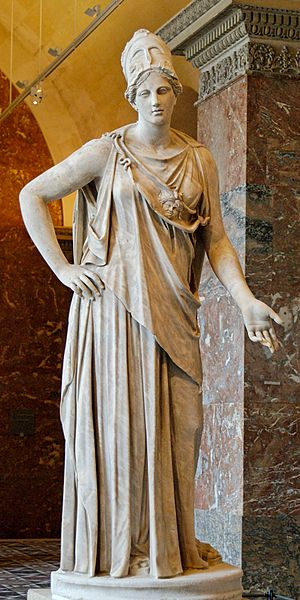
W for Goddess of War and Wisdom, Athena
Athena is the goddess of wisdom, craft, and war in ancient Greek religion and mythology. She is known for her calm temperament, as she moves slowly to anger. Also, she is noted to have only fought for just reasons, and would not fight without a purpose. The Athenians founded the Parthenon on the Acropolis of her namesake city, Athens (Athena Parthenos), in her honor.

X for Xeno
Xeno is a term that simply means Foreign in Greek. When you add both Xeno and Phobia (both Greek words), you get what is currently the outlook around the world i.e. Fear of Foreigners.  Here in Greece, in spite of the fact that both these words originated here, we never even once experienced Xenophobia.

Y for Yamas
Yamas means cheers in Greek! Do this when you are toasting in a restaurant or bar over a Greek meal. Thanks to Trafalgar, we experienced the joyous sound of a collective Yamas one elegant evening in a vibrant restaurant in the Plaka neighborhood. With the lively tune from Bouzouki (popularized by movie Zorba the Greek) playing in the background and with locals matching each other’s Greek moves, the cheery Yamas call is all but indispensable.

Z for Zeus
And lastly, Z for Zeus. The king and symbolic father of the Immortals; this A to Z Guide would be incomplete without mentioning whose name is revered invariably in the Ancient Greek stories. 

Zeus was the god of the sky and ruler of the Olympian gods. He overthrew his father, Cronus, and then drew lots with his brothers Poseidon and Hades, in order to decide who would succeed their father on the throne. Zeus won the draw and became the supreme ruler of the gods, as well as lord of the sky and rain. His weapon was a thunderbolt which he hurled at those who displeased or defied him, especially liars and oathbreakers. Zeus, the presiding deity of the universe, ruler of the skies and the earth

Here is the part where we come to the end of our A to Z Guide of our Greek Odyssey. Hope you enjoyed the journey as much as we did! I have tried to cover as much as possible of the highlights of our holiday. 

This Guide cannot be complete without mentioning some more names.
I would like to add A for Anna Zora, E for Erin (our smart, warm, intelligent and sassy tour guides) and T for Trafalgar who deserve to be mentioned for making our little Greek Odyssey a truly memorable one. This Greek Odyssey would not have been special without their presence.

I cannot help but mention a few of the popular travel quotes as I sign off and look forward to new travels in 2017.

“Travel is fatal to prejudice, bigotry, and narrow-mindedness.” – Mark Twain

“The world is a book and those who do not travel read only one page.” – St. Augustine

“For my part, I travel not to go anywhere, but to go. I travel for travel’s sake. The great affair is to move.” – Robert Louis Stevenson

“A traveler without observation is a bird without wings.” – Moslih Eddin Saadi

Below is the lasting memory of our Greek Odyssey captured at Cape Sounion
At Cape Sounion a beautiful sunset


P.S: A lot of historical information has been sourced from Wikipedia for verification and maintaining the authenticity of the blog